
Out-of-State Suspended License Insurance — Washington
Free to compare
The Cross-State Suspension Reality
You moved to Washington with a suspended driver's license from another state. You went to the DOL to apply for a Washington license assuming your suspension stayed behind in your former state, and the counter clerk told you that you cannot get a Washington license until you clear the out-of-state suspension. The suspension followed you across state lines, and now you are stuck without legal driving privileges in either state.
This article clarifies how Washington treats out-of-state suspensions, whether your SR-22 filing requirement transfers with you, what the interstate reporting systems actually track, and the specific procedural path to get your Washington license when your suspension originated elsewhere. The structural confusion most drivers face is believing they can sidestep an out-of-state suspension by moving — the interstate licensing compacts close that gap.
“Washington queries PDPS during every license application — any unresolved out-of-state suspension blocks issuance until the foreign state reports the matter cleared.”

Find a Washington Insurer That Will Cover You Now
Get My Washington Suspended License Insurance QuoteImmediate rejection
WA License Application Block
Washington DOL queries the National Driver Register (NDR) and Problem Driver Pointer System (PDPS) during every new license application. Any unresolved out-of-state suspension, revocation, or outstanding reinstatement requirement flags immediately and blocks issuance of a Washington license until the foreign state reports the matter cleared.
Washington Department of Licensing interstate compact verification protocols
How Interstate Licensing Compacts Work
Washington participates in the Driver License Compact (DLC) and the Non-Resident Violator Compact (NRVC). These agreements require member states to share conviction data, suspension notices, and reinstatement status. When you apply for a Washington license, DOL checks PDPS — a national pointer system maintained by the American Association of Motor Vehicle Administrators (AAMVA) — which flags any unresolved actions in other states. The system does not transfer your suspension to Washington; it blocks Washington from issuing you a new license until the originating state reports that your suspension is cleared and reinstatement requirements are satisfied.
The structural blocker most drivers miss: you cannot outrun a suspension by changing your address. The suspension stays on your driving record in the state that issued it, and every state you move to will see it when you apply for a license. Washington will not issue you a license while another state holds an active suspension against you, regardless of whether you physically live in Washington now.
Reinstatement must happen in the state that suspended you. If Ohio suspended your license for a DUI, you must satisfy Ohio's reinstatement requirements — Ohio's fees, Ohio's SR-22 filing period, Ohio's alcohol education classes — before Washington DOL will issue you a Washington license. Moving to Washington does not change the jurisdiction that controls your reinstatement process.
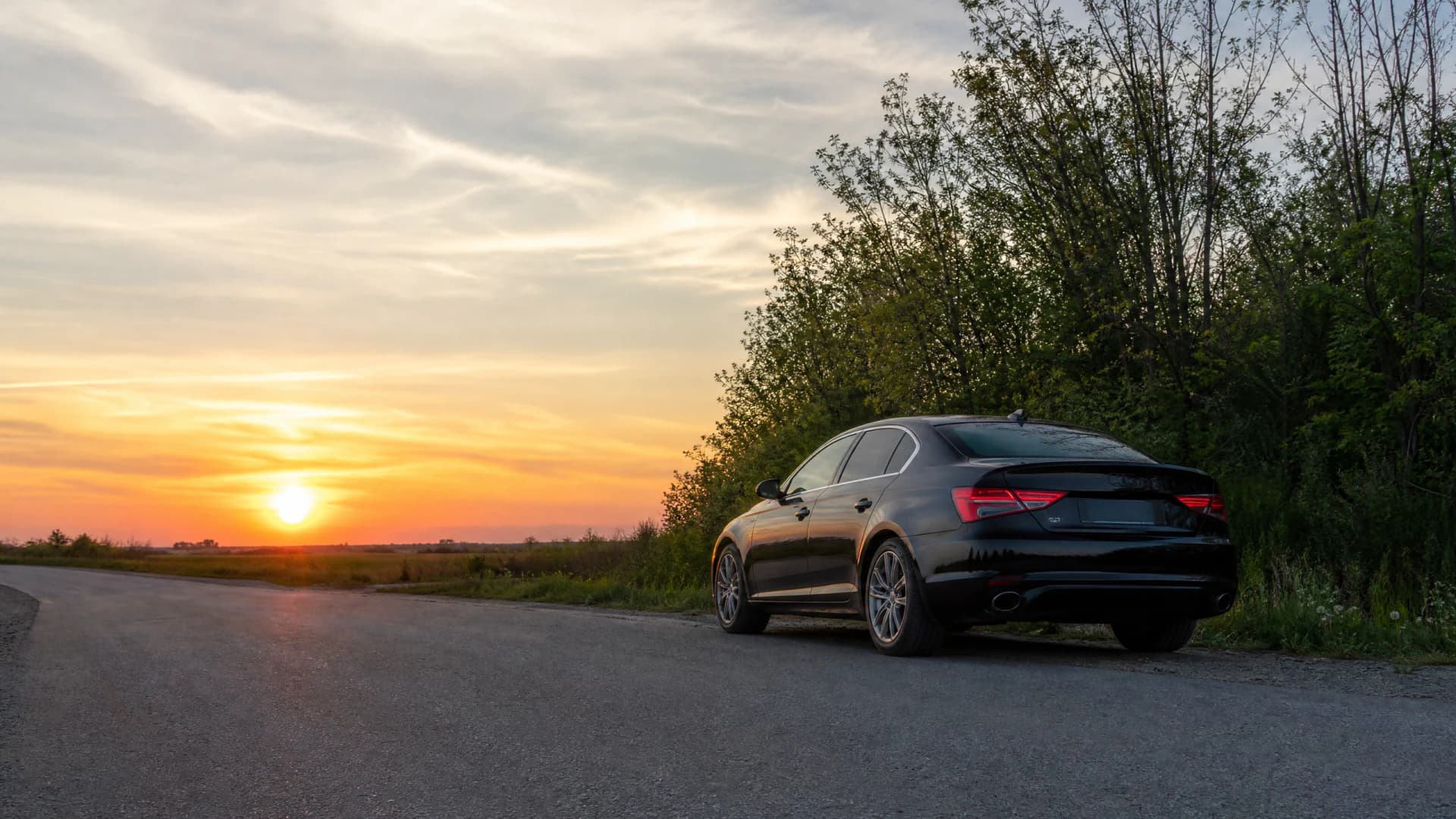
Washington will not issue you a license while another state reports an active suspension — reinstatement happens in the state that imposed the suspension, not where you live now.
Related Articles



SR-22 Filing Jurisdiction and Washington Requirements
SR-22 filing jurisdiction follows the state that requires it, not the state where you currently reside. If California suspended your license for a DUI and California requires three years of SR-22 filing, you must maintain California SR-22 for that full period even if you move to Washington. The SR-22 certificate is filed with California DMV, not Washington DOL. Your insurance carrier files the form electronically with the state you name on the policy application. If you purchase insurance through a Washington-based agent, specify that the SR-22 must be filed with California (or whichever state imposed the requirement).
Once your out-of-state suspension is cleared and you obtain a Washington license, check whether Washington separately requires SR-22 for your violation. Washington requires SR-22 for DUI convictions, certain reckless driving convictions, uninsured accident involvement, and habitual traffic offender (HTO) designations. If your out-of-state conviction falls into one of these categories and Washington DOL classifies it as reportable under the Driver License Compact, Washington may impose its own SR-22 filing requirement on top of the originating state's requirement. In that case, you will need to maintain SR-22 filing with both states simultaneously — dual filings. Most carriers can accommodate this by issuing two certificates from the same policy.
If the violation that caused your out-of-state suspension does not trigger Washington's SR-22 rules, you will not need Washington SR-22 once you obtain your Washington license. However, you must still complete the originating state's SR-22 period to keep that state's reinstatement valid. Dropping SR-22 before the mandated period ends in the originating state can trigger a new suspension, which PDPS will report to Washington, and Washington will then suspend your newly issued Washington license for driving on a suspended out-of-state license.
3 years
WA SR-22 Filing Period for DUI
Washington requires three years of continuous SR-22 filing after a DUI conviction. If your out-of-state DUI is reported to Washington under the Driver License Compact and Washington imposes its own SR-22 requirement, the three-year clock starts from the date Washington receives the conviction report, not the date of the original conviction.
RCW 46.29.490, Washington SR-22 insurance filing requirements
Non-Owner Policies and Insurance While Suspended
If you do not own a vehicle, a non-owner SR-22 policy satisfies the filing requirement in both the originating state and Washington if dual filing is required. Non-owner policies provide liability coverage when you drive a vehicle you do not own — a rental, a borrowed car, a company vehicle. The policy does not cover a specific vehicle; it follows you as a driver. Carriers writing non-owner SR-22 in Washington include GEICO, Progressive, Dairyland, Bristol West, The General, and USAA (for eligible members). Non-owner policies typically cost less than standard auto policies because they carry lower risk — you are not insuring collision or comprehensive coverage on a vehicle you own.
Some drivers assume they do not need insurance at all while their license is suspended. This assumption fails in two situations. First, if the state that suspended you requires continuous SR-22 filing as a condition of reinstatement, you must maintain that filing even during the suspension period. Letting the policy lapse triggers an SR-22 cancellation notice to the DMV, which extends your suspension or converts it to a revocation in many states. Second, if you live with other drivers or have access to household vehicles, those drivers' insurers may require you to be listed as an excluded driver or covered under the household policy to avoid an uninsured driver exposure.
What Happens If You Drive in Washington on an Out-of-State Suspended License
Driving in Washington while your out-of-state license is suspended constitutes driving while license suspended (DWLS) under RCW 46.20.342. Washington law treats out-of-state suspensions the same as in-state suspensions for enforcement purposes. If stopped, you face criminal charges in Washington even though the underlying suspension originated in another state. First-degree DWLS (suspension for DUI, reckless driving, vehicular assault, or certain other serious offenses) is a gross misdemeanor punishable by up to 364 days in jail and a $5,000 fine. Second-degree DWLS (suspension for other causes) is also a gross misdemeanor with the same maximum penalties. A DWLS conviction in Washington creates a new suspension on top of your existing out-of-state suspension, compounding your reinstatement requirements in both states.
Insurance consequences layer on top of criminal penalties. If you are caught driving without a valid license, your insurer may deny any claim arising from that trip under the policy's licensing clause. If you cause an accident while driving on a suspended license, you may face personal liability for damages and injuries because your policy excluded coverage for unlicensed operation. Washington is a tort state with mandatory liability minimums of $25,000 per person, $50,000 per accident for bodily injury, and $10,000 for property damage. Causing a serious accident without valid insurance coverage exposes you to judgments that can attach your wages and assets for years.

Your Next Step
Contact the DMV in the state that suspended your license today and request a reinstatement requirements letter. Identify whether SR-22 is required, for how long, and whether you can satisfy the requirements remotely or must return in person. If SR-22 is required, compare non-owner SR-22 carriers writing your filing state — start with the carriers listed in this article that operate in both your originating state and Washington. Once you file SR-22 and satisfy all out-of-state reinstatement conditions, monitor PDPS clearance through the originating state's online license status portal, then apply for your Washington license only after the hold is removed. Do not assume the suspension disappeared when you crossed the state line — interstate compacts ensure it follows you until formally cleared.
The Reinstatement Pathway Across State Lines
Contact the DMV or licensing agency in the state that suspended your license. Request a detailed letter or online account summary showing your suspension cause, the specific reinstatement requirements (fees, course completion, SR-22 filing period, retest), and the current status. Many states allow you to pay reinstatement fees online or by mail and submit proof of insurance electronically. If the state requires in-person steps — such as a retest or a hearing — you may need to travel back to that state or request a waiver for out-of-state residents. Not all states grant waivers; some require physical presence.
If the originating state requires SR-22 insurance, you must file SR-22 with that state's DMV even though you no longer live there. Purchase a non-owner SR-22 policy if you do not own a vehicle — this satisfies the filing requirement without insuring a car. The SR-22 certificate must name the state that suspended you as the filing jurisdiction. Once filed, the insurer transmits the SR-22 to that state's DMV electronically. After you satisfy all reinstatement conditions in the originating state, that state updates your driver record to show reinstatement complete. PDPS reflects the cleared status within days to weeks depending on the state's reporting cadence. Only after PDPS shows no active holds can you apply for a Washington license.
Get Your Free Quote
Get My Washington Suspended License Insurance QuoteFrequently Asked Questions
Can I get a Washington driver's license if my license is suspended in another state?
No. Washington DOL checks the Problem Driver Pointer System (PDPS) during every new license application. Any active out-of-state suspension blocks issuance of a Washington license until the originating state reports reinstatement complete. You must satisfy the other state's reinstatement requirements first, then apply for a Washington license after PDPS shows the hold cleared.
Do I need SR-22 insurance if my out-of-state suspension required it?
Yes. SR-22 filing jurisdiction follows the state that imposed the requirement, not where you live now. If the state that suspended you requires three years of SR-22, you must maintain that filing with that state's DMV for the full period even after moving to Washington. File SR-22 with the originating state using a non-owner policy if you do not own a vehicle.
Will my out-of-state DUI suspension show up in Washington?
Yes. Washington participates in the Driver License Compact, which requires member states to report convictions and suspensions. Your out-of-state DUI conviction appears on your driving record in Washington, and Washington may impose its own SR-22 filing requirement and suspension on top of the originating state's penalties if the offense meets Washington's reportable violation thresholds under RCW 46.20.
Can I drive in Washington while my out-of-state license is suspended?
No. Driving in Washington on an out-of-state suspended license constitutes driving while license suspended (DWLS) under RCW 46.20.342. First-degree DWLS (for DUI or serious offense suspensions) is a gross misdemeanor punishable by up to 364 days in jail and a $5,000 fine. A conviction creates a new Washington suspension on top of your existing out-of-state suspension.
How long does it take for an out-of-state reinstatement to clear in Washington?
PDPS typically reflects cleared reinstatement status within days to weeks after the originating state updates your record. Processing time varies by state — some update electronically within 48 hours, others take two to three weeks to report status changes. Check the originating state's online license status portal to confirm clearance before applying for a Washington license.
Do I need insurance in Washington if my license is suspended?
If the state that suspended you requires SR-22 filing as a reinstatement condition, you must maintain continuous SR-22 coverage even during the suspension period. Letting the policy lapse triggers an SR-22 cancellation notice that extends your suspension. Purchase a non-owner SR-22 policy if you do not own a vehicle — this satisfies the filing requirement without insuring a car you own.
What happens if I let my SR-22 lapse while living in Washington?
The insurer notifies the state that required the SR-22 filing, which then extends your suspension or converts it to a revocation. PDPS reports the new suspension to Washington, and Washington DOL will suspend any Washington license you hold for driving on a suspended out-of-state license. You must refile SR-22, pay reinstatement fees in both states, and restart the filing period from the lapse date in most cases.