
SR-22 After DWI — Washington
Free to compare
The Day After Your DWI Suspension Letter Arrives
You opened the Washington Department of Licensing (DOL) suspension notice and saw two paths: a 90-day hard suspension, or something called an Ignition Interlock License (IIL) that lets you drive starting immediately. The letter lists SR-22 insurance as a requirement for both. Your employer needs you to drive by Monday. You don't understand how a license you can use right away still requires SR-22 filing, or whether the ignition interlock device gets installed before or after you apply for the IIL.
This article walks the actual procedural sequence Washington requires—not the order most drivers guess. SR-22 insurance, IID installation, and IIL application happen in a specific locked order. Missing a step or reversing the sequence adds weeks to your timeline and leaves you stuck at home while your job moves on without you.
“Driving any vehicle without the IID, even in an emergency, triggers automatic IIL revocation with no hardship option for the remainder of your suspension.”
Find a Washington Insurer That Will Cover You Now
Get My Washington Suspended License Insurance Quote3 years
Washington SR-22 Filing Period
Washington requires continuous SR-22 insurance filing for 3 years after a DWI conviction under RCW 46.20.720. The period starts from your conviction date, not your filing date. Any lapse triggers DOL notification and immediate suspension.
RCW 46.20.720 (Ignition Interlock Device Requirements)
What SR-22 Actually Does in a Washington DWI Case
SR-22 is not insurance. It is a liability insurance certificate your carrier files electronically with the Washington DOL proving you carry at least the state's minimum liability coverage: $25,000 bodily injury per person, $50,000 per accident, and $10,000 property damage. The DOL will not process your IIL application without an active SR-22 filing already on record in their system.
Most carriers who write SR-22 policies in Washington can file the certificate within 24 hours of binding coverage. The filing itself costs $25–$50 as a one-time fee, but your premium will rise because you now fall into the high-risk underwriting tier. Expect monthly premiums between $120 and $220 depending on your county, age, and whether you own a vehicle.
If you do not own a vehicle, you need a non-owner SR-22 policy. This covers liability when you drive someone else's car or a rental. Non-owner policies cost less—typically $40–$80 per month—but the SR-22 filing requirement is identical. The DOL does not distinguish between owner and non-owner filings; both satisfy the reinstatement condition.
The 3-year SR-22 period runs from your DWI conviction date. If you let coverage lapse at any point during those 3 years, your carrier notifies DOL electronically within 24 hours and your license suspends again immediately. There is no grace period. Reinstatement after a lapse requires paying a new $75 reinstatement fee on top of refiling SR-22.
Washington DOL will not accept your IIL application until SR-22 is filed and verified in their system—application before filing wastes the $100 fee and adds 7–10 processing days.

What Happens After You Submit the IIL Application
Once DOL receives your completed IIL application, payment ($100 fee), SR-22 verification, and IID installation certificate, they process the application within 5–7 business days. Approval is not automatic. DOL checks for other outstanding suspensions that disqualify you—unpaid child support, failure to appear warrants, or unresolved insurance judgments from prior accidents. If any disqualifying suspension exists, your IIL application is denied and the $100 fee is not refunded.
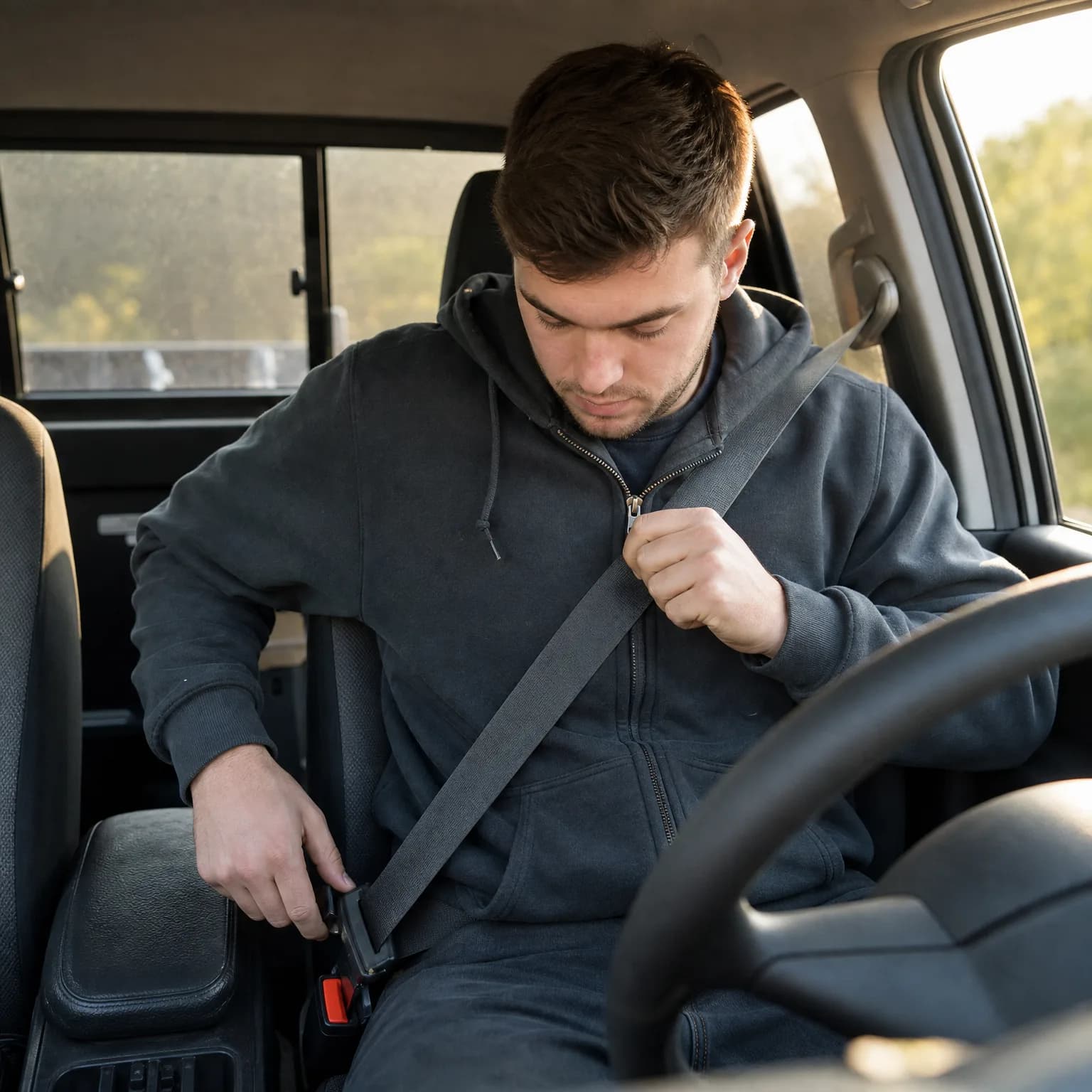
The IIL itself allows unrestricted driving—no route limits, no time-of-day restrictions—as long as you only drive vehicles equipped with your registered ignition interlock device. Driving any vehicle without the IID, even in an emergency, triggers automatic IIL revocation under RCW 46.20.385. Revocation is not a warning—it is immediate suspension with no hardship option available for the remainder of your original suspension period.
Your ignition interlock device logs every drive, every failed breath test, and every attempt to tamper with or bypass the system. DOL receives these logs monthly. A single failed rolling retest (the device requires periodic retests while driving) or one missed calibration appointment extends your IIL period by the same number of days you were out of compliance. Three violations within your IIL term trigger revocation.
$100
Washington IIL Application Fee
Washington charges a $100 non-refundable application fee for the Ignition Interlock License. This fee is separate from the $75 base reinstatement fee and the $170 DUI-specific reinstatement fee you will pay when your full license eligibility returns.
Washington Department of Licensing fee schedule

When Your IIL Period Ends and Full Reinstatement Begins
Your IIL is not your permanent license. It is a restricted credential valid only during your suspension period. When your suspension term ends—90 days minimum for a first DWI, up to 4 years for repeat offenders—you must apply for full license reinstatement. Reinstatement requires completing a DOL-approved Alcohol/Drug Information School, paying a $170 DUI reinstatement fee on top of the $75 base fee, and maintaining your SR-22 filing for the full 3-year period.
The 3-year SR-22 clock does not reset when you transition from IIL to full license. It runs continuously from your conviction date. Most drivers hit full license eligibility while still inside the 3-year SR-22 window, meaning you will drive on a fully reinstated license but still carry SR-22 for months or years afterward. Canceling SR-22 before the 3-year mark suspends your license again immediately, even if reinstatement was otherwise complete.
Finding SR-22 Coverage That Files Fast
Not every carrier writes SR-22 policies in Washington, and those that do vary wildly in filing speed and cost. GEICO, Progressive, The General, and Bristol West all write SR-22 in Washington and file electronically within 24 hours of binding. State Farm files SR-22 but processes applications more slowly and often declines drivers with DWI convictions less than 6 months old.
Start with a non-owner quote if you do not own a vehicle. Non-owner SR-22 satisfies Washington's filing requirement at half the cost of a standard policy, and you can convert to an owner policy later if you buy a car. Dairyland and Bristol West specialize in non-owner SR-22 and operate entirely online—no agent required. Compare at least three carriers before committing; monthly premium differences of $60–$80 are common for identical coverage limits.
When you request quotes, confirm the carrier can file SR-22 electronically with Washington DOL and ask for the specific timeline between binding and filing. Carriers who mail paper forms add 7–14 days to your IIL eligibility window. Every day you wait without an active SR-22 filing is a day you cannot apply for the IIL, and a day closer to losing your job because you cannot drive.
The Locked IIL Application Sequence
Step one: secure SR-22 insurance and confirm your carrier has filed the certificate with DOL. Call DOL's automated line at 360-902-3900 and verify the filing shows active in their system before moving forward. This verification takes 24–72 hours after your carrier submits the form. Do not proceed to step two until DOL confirms receipt.
Step two: schedule ignition interlock device installation with a DOL-approved provider. Washington maintains a list of certified IID vendors at dol.wa.gov; only devices installed by these vendors satisfy the IIL requirement. Installation costs $70–$150 upfront, plus $60–$90 monthly monitoring fees. The vendor gives you a certificate of installation—this certificate is required documentation for your IIL application and cannot be backdated or replaced easily if lost.
Get Your Free Quote
Get My Washington Suspended License Insurance QuoteFrequently Asked Questions
Can I get SR-22 insurance the same day I apply for an Ignition Interlock License in Washington?
No. You must secure SR-22 insurance first, wait 24–72 hours for DOL to verify the filing in their system, then install the ignition interlock device, and only after both steps submit your IIL application. Same-day processing is not possible because DOL requires verified SR-22 on file before accepting the application.
How much does SR-22 insurance cost in Washington after a DWI?
Monthly premiums typically range from $120–$220 for standard policies and $40–$80 for non-owner policies, depending on your county, age, and carrier. The SR-22 filing fee itself is $25–$50 one-time. Estimates based on available industry data; individual rates vary by driving history and coverage selections.
What happens if I let my SR-22 insurance lapse during the 3-year filing period in Washington?
Your carrier notifies Washington DOL electronically within 24 hours of cancellation and your license suspends immediately. There is no grace period. Reinstatement requires refiling SR-22, paying a new $75 reinstatement fee, and restarting the suspension clock if the lapse occurred during your IIL term.
Do I need SR-22 if I don't own a car in Washington?
Yes. Washington requires SR-22 filing for DWI reinstatement regardless of vehicle ownership. You need a non-owner SR-22 policy, which covers liability when you drive someone else's vehicle or a rental. Non-owner policies cost $40–$80 per month and satisfy the same DOL filing requirement as standard policies.
Can I drive outside Washington with an Ignition Interlock License?
Washington's IIL allows you to drive in other states, but only in a vehicle equipped with your registered ignition interlock device. Some states do not recognize out-of-state IILs as valid licenses. Verify recognition with the destination state's DMV before crossing state lines to avoid driving-under-suspension charges.
How long does Washington DOL take to approve an Ignition Interlock License application?
DOL processes IIL applications within 5–7 business days after receiving your completed application, $100 fee, SR-22 verification, and IID installation certificate. Approval is not automatic—DOL checks for other disqualifying suspensions like unpaid child support or failure-to-appear warrants before issuing the IIL.
Does the 3-year SR-22 requirement reset when I get my full license back in Washington?
No. The 3-year SR-22 period runs continuously from your DWI conviction date. Transitioning from an Ignition Interlock License to a fully reinstated license does not restart the clock. You must maintain SR-22 for the full 3 years regardless of license status changes.